
Every organization, regardless of its size or industry, faces risk.
Some risks are obvious: equipment failure, financial losses, cybersecurity threats, accidents, supply-chain disruptions, or natural disasters. Others are less visible, developing quietly until they become serious problems.
The difference between an organization that is overwhelmed by risk and one that responds effectively often comes down to two things: risk assessment and risk mitigation.
Risk cannot always be eliminated. But when it is identified, understood, and managed deliberately, its potential impact can be significantly reduced.
What Is Risk Assessment?
Risk assessment is the process of identifying potential hazards or threats, evaluating how likely they are to occur, and determining how seriously they could affect people, operations, assets, or objectives.
It essentially asks three questions:
- What could go wrong?
- How likely is it to happen?
- What would happen if it did?
Answering these questions allows organizations to move from reacting to problems toward anticipating them.
Identifying Risks Before They Become Problems
Effective risk management begins with identification.
Organizations can identify risks through workplace inspections, audits, incident reports, employee feedback, financial analysis, cybersecurity assessments, historical data, industry trends, and scenario planning.
It is important to look beyond immediate threats.
A risk assessment should consider both internal and external risks. Internal risks might include inadequate training, equipment failure, poor processes, or staff shortages. External risks could include regulatory changes, economic instability, extreme weather, political developments, cyberattacks, or changes in customer behavior.
The goal is not to predict the future perfectly. It is to understand what could reasonably happen.
Assessing Probability and Impact
Once risks have been identified, they need to be evaluated.
Two common factors are likelihood and impact.
A risk that is highly likely to occur but has a minor impact may require a different response from a risk that is unlikely but could have catastrophic consequences.
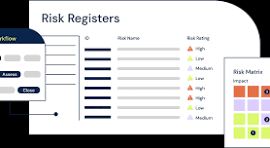
This is why many organizations use a risk matrix to rank risks according to their probability and potential severity.
For example:
| Risk | Likelihood | Impact | Priority |
| Equipment failure | Medium | High | High |
| Data breach | Medium | Very High | Critical |
| Minor workplace injury | High | Low | Medium |
| Major supply disruption | Low | High | High |
This type of prioritization helps organizations focus their resources where they are most needed.
Risk Mitigation: What Happens Next?
Identifying a risk is only the beginning.
Risk mitigation involves taking deliberate action to reduce either the likelihood of a risk occurring or the consequences if it does occur.
Depending on the situation, an organization may choose to:
- Avoid the risk by eliminating the activity that creates it.
- Reduce the risk by introducing controls, training, technology, or improved procedures.
- Transfer the risk through mechanisms such as insurance, contracts, or outsourcing.
- Accept the risk when the potential consequences are understood and considered manageable.
The appropriate strategy depends on the nature and severity of the risk.
The Importance of Preventive Controls
Good mitigation is proactive rather than reactive.
For example, instead of waiting for a cybersecurity breach, an organization can implement strong passwords, multi-factor authentication, employee training, regular software updates, backups, and access controls.
Instead of waiting for workplace accidents, organizations can conduct safety inspections, provide appropriate protective equipment, maintain machinery, and ensure employees understand safe operating procedures.
Prevention may require investment, but the cost of prevention is often far lower than the cost of responding to a major incident.
Risk Management Is Everyone’s Responsibility
Risk management should not belong exclusively to senior management or the risk department.
Employees at every level can identify risks because they often see operational problems before they appear on management reports.
Creating a culture where employees feel comfortable reporting hazards, near misses, weaknesses, and emerging threats is therefore essential.
Importantly, organizations should avoid creating a culture of blame.
If people fear punishment for reporting problems, they may remain silent. If they know that reporting concerns can lead to improvement, they are more likely to speak up.
A strong risk culture treats early warnings as valuable information rather than inconvenient criticism.
Preparing for the Risks You Cannot Prevent
Even the strongest mitigation strategies cannot eliminate every risk.
That is why organizations also need contingency and response plans.
What happens if the power goes out?
What happens if critical data becomes unavailable?
What happens if a key supplier suddenly stops operating?
What happens if an important employee is unavailable?
What happens if a major accident occurs?
Scenario planning allows organizations to think through these questions before they become emergencies.
A good response plan should identify responsibilities, communication channels, critical resources, escalation procedures, and recovery priorities.
Preparedness turns uncertainty into something that can be managed.
Risk Assessment Is Not a One-Time Exercise
One of the biggest mistakes organizations make is treating risk assessment as a document that is completed and then forgotten.
Risk changes.
New technologies introduce new vulnerabilities. Employees change. Regulations evolve. Markets shift. Suppliers fail. Threats become more sophisticated.
For this reason, risk assessments should be reviewed regularly and whenever there is a significant change in operations.
After an incident, organizations should also ask:
What happened?
Why did it happen?
What controls failed?
What can we change to prevent a recurrence?
Learning from incidents is one of the most valuable components of effective risk management.
From Risk Awareness to Risk Resilience
The ultimate goal of risk assessment and mitigation is not to create an organization that is afraid of risk.
It is to create an organization that understands risk and is prepared to manage it.
No organization can eliminate uncertainty. But organizations can develop the ability to anticipate threats, make informed decisions, respond effectively, and recover quickly.
That is the difference between simply managing risk and building resilience.
Risk assessment tells us where vulnerabilities exist.
Risk mitigation helps us reduce those vulnerabilities.
Preparedness gives us the confidence to respond when prevention is not enough.
And when these elements work together, uncertainty becomes less of a threat and more of something an organization is equipped to navigate.